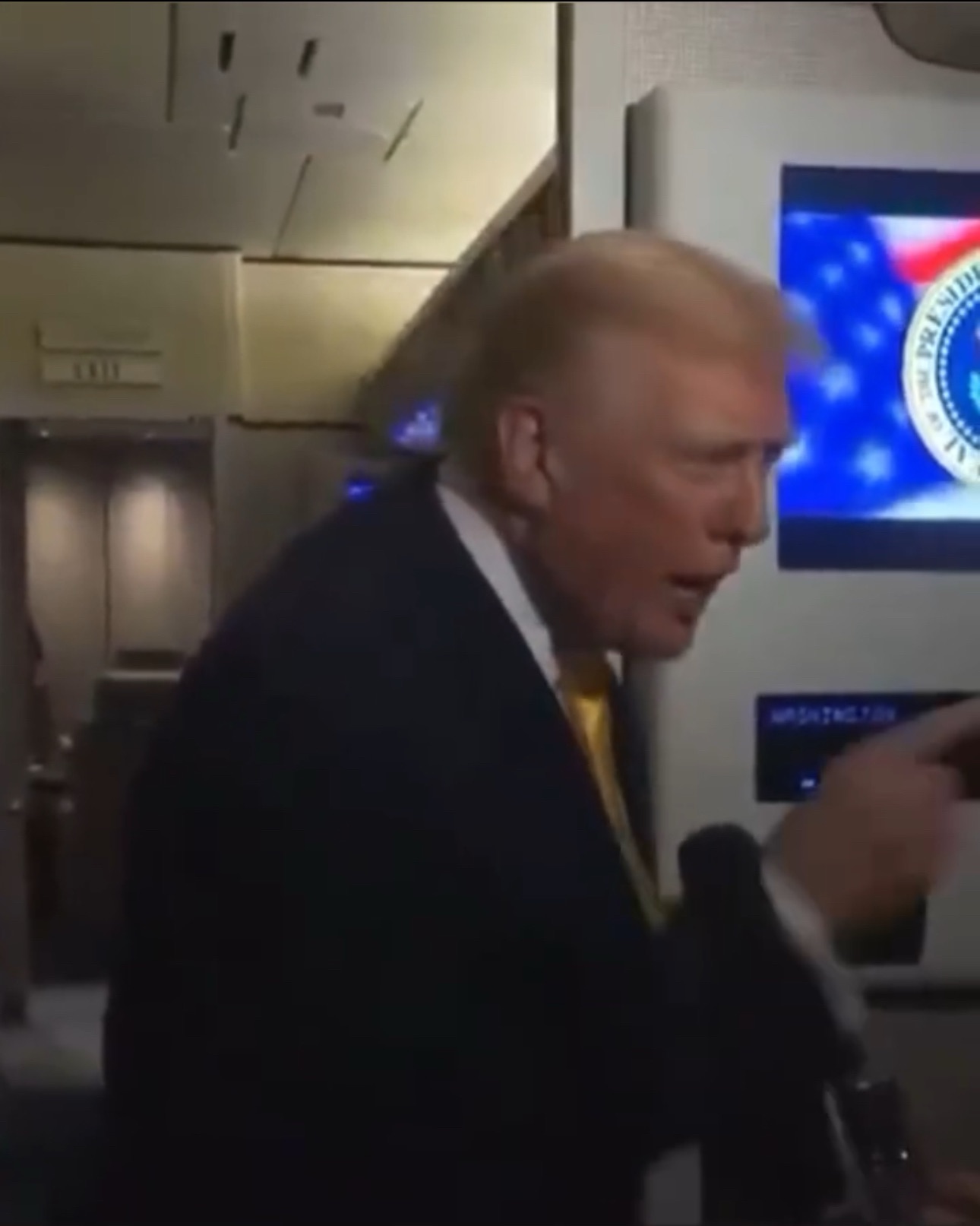

A recent clip from aboard Air Force One shows Donald Trump snapping at a female reporter who dared to ask about the Jeffrey Epstein files. He pointed a finger in her face and, in a tone that sounded both mocking and dismissive, said, “Quiet. Quiet, piggy.”
The backlash was immediate — and for good reason. On the surface, it’s just a crass insult. But below that? It raises serious questions about power, decorum, and the role of public officials when emotions run high. Calling a journalist “piggy” dehumanizes her. It’s infantilizing, gendered, and rooted in a disrespect that feels deeply personal — not just a political attack.
This moment forces us to confront: How much accountability do we demand from our leaders when they disrespect people in public spaces? Should there be a standard of civility, especially toward women doing their job? And when a political figure uses demeaning language on camera, what does that say about how they treat power — and those who challenge them?
Let’s talk:
- Do these kinds of insults matter if they happen in the heat of the moment?
- At what point does a disrespectful comment become a larger reflection of a leader’s character?
- How do we balance free speech, press freedom, and holding public figures accountable for what they say — and how they say it?