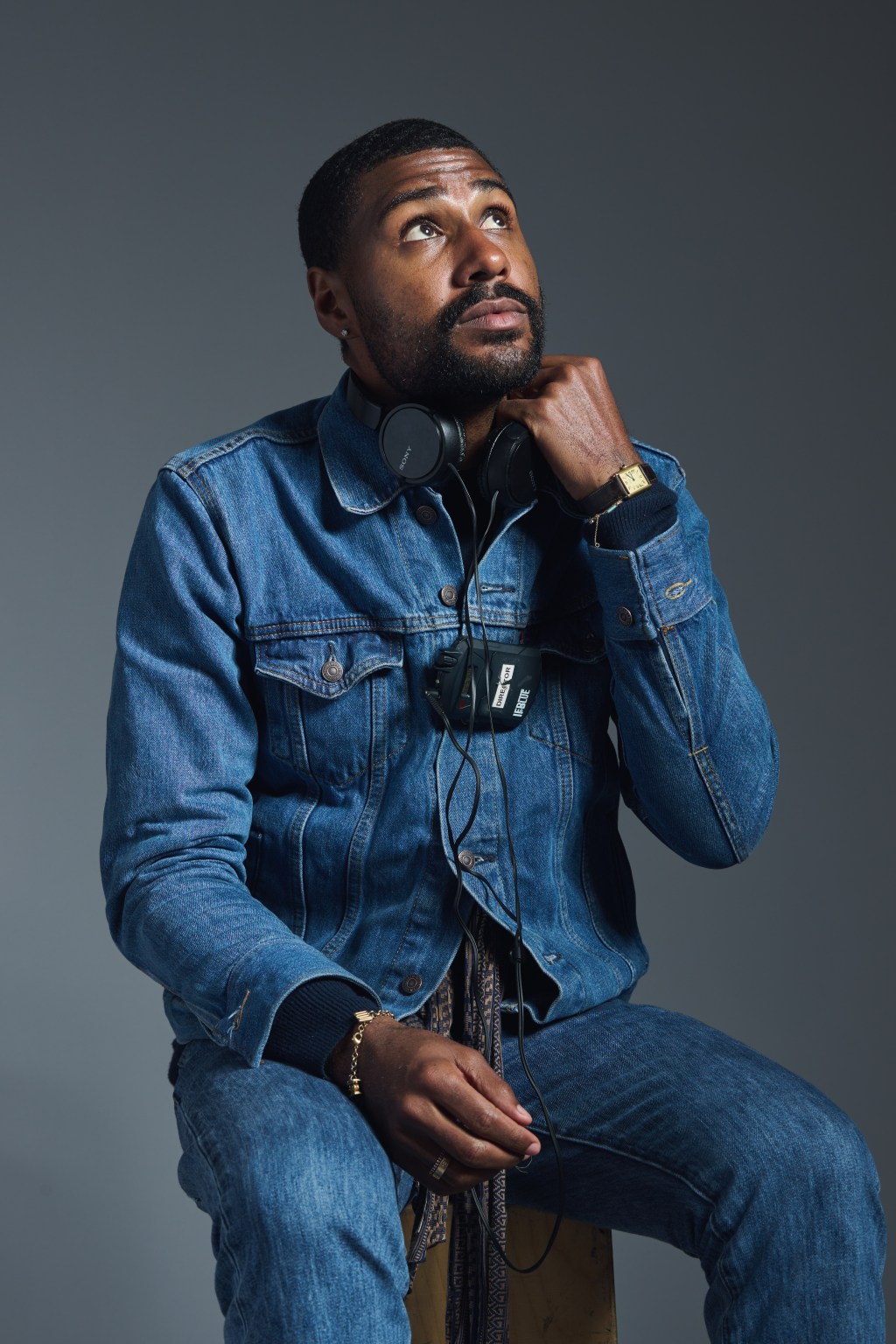
The austerity of celebrity “stan” culture has become more stringent and divisive than ever before. If you dare wade into the choppy waters of the Rihanna-aligned “Navy,” the swarm of the “Bey-hive,” or the boutique of “Barbz,” with anything besides glowing praise, you’re liable to find yourself the target of online harassment. This form of tribalism has become commonplace in society, making it the perfect subject matter for former GQ editor Mark Anthony Green to undertake.
His tension-driven directorial debut, OPUS, stars Emmy-winner Ayo Edebiri as a bright-eyed and overlooked journalist presented with a dream opportunity: to join a gaggle of press on the compound of mysterious pop icon Alfred Moretti (John Malkovich) for an exclusive listening party. But something isn’t quite right, and as oddities mount and disappearances grow, a once-in-a-lifetime experience becomes a mystery to uncover Moretti’s vaguely nefarious cult.
OPUS prods at the absurd nature of celebrity, evoking the likes of Madonna and Kanye West in its mythos building of Moretti. Yet, it leaves some meat on the bone in exploring this theme and doesn’t derive a definitive conclusion. This positions OPUS as a genuine driver of conversation, but it can leave general audiences lost on where to go with it. It’s a fascinating and, at times, head-scratching “A24” film. That may have been intentional, with Edebiri’s brilliantly acted character of Ariel Ecton serving as a proxy for the audience—her facial expressions often mirroring the viewer’s confusion while the rest of the cast acts as though everything is normal. Through every jaw-dropping moment, Ecton also reflects the plight of the Black professional—often unheard and disregarded until it’s too late.
Green sat down with writer Brandon Pope to discuss the themes of OPUS and the origins of his first feature. The whole conversation has been edited for clarity.
Brandon Pope: First of all, I know you’ve got tons of ideas in that head of yours. Why was this the first to take from thought to theater?
Mark Anthony Green: I think that tribalism has made life so divisive. It’s made culture so splintered. And when I started writing this six years ago, I didn’t know it would be more relevant today. And it’s much bigger than just entertainment. So, I wanted to, I don’t know—it just seemed like there was a fun way to interrogate this. Sometimes, there’s not a fun way to interrogate it. And that’s not my strength because I’m a smart ass, and I like to have fun. I think there should be a lot of honey with the medicine. And for this one, we found an entertaining approach to have, hopefully, a pretty serious conversation.
Pope: It brought the laughs, and you got the perfect actress for that with Ayo Edebiri. How important was getting her to commit to this?
Green: It was essential. I mean, for every actor, they need to commit. But I think there’s a misconception about actors—that they are so focused on their careers or public perception that they’re not artists. They read a script, and if they believe in it, they want to do it. And Ayo is, without a shadow of a doubt, one of the greats. She read it and was committed to what the film says and to that character, separate from any opinion or thought I have. The greats are dedicated to the craft and to whatever story they’re on to tell.
Pope: I’ve seen this movie described as a horror. I’ve seen it described as a thriller. I’ve heard you say you do not want it to be called an elevated horror.
Green: I hate that. Absolutely. What is elevated?
Pope: I see it as more of a P.O.V. style of film. It’s not traditionally filmed from the central character’s perspective, but Ariel serves as a proxy for the audience because of her relatability.
Green: The film’s pacing is one of the things I’m the most proud of. Part of the reason I chose to pace this film that way—not to murder somebody in the first five minutes—was to put you in Ariel’s world. I wanted you to see her at work and home on a date. I wanted her problem to be something you feel. This needed to be an intelligent Black woman whose shoulders we put this entire film on. Even with some trickier camera stuff, we wanted to mirror her savvy, intuitive approach to a spooky situation.
Pope: I think about how Ariel, as the only Black woman character central to the narrative, is the only one that seems to be yelling out, “Hey, something is messed up here. Listen to me.” And people were dismissing her.
Green: It’s part of the original intention in creating the story. Black women are often not listened to. There’s an invisibility that must be very frustrating. You could be a young person, a queer person, a woman—anyone without power in a situation where you’re speaking up and people won’t listen. But Black women feel that criminally too often. I hope Black women watch OPUS and see that that’s being acknowledged without it being some heavy-handed film about race.
Pope: You mentioned the Black artists for the music. Right away, when the film started, I heard “Maggot Brain,” one of my all-time favorite songs!
Green: You know, ball, Brandon! I wanted to experiment with Black, alt-cool kid music. So, it starts with “Maggot Brain,” which—George Clinton is like the godfather of this thing. Then you have a Lenny Kravitz cameo, Nile Rodgers, and The Dream performing original songs, and it ends with “TV on the Radio.” Making a film is intensely personal; that song means so much to me. I begged and pleaded to clear it. I’m so honored the movie starts that way.
Pope: Moretti—what a character he ended up being. With the Moretti angle, what does all this say about celebrity “stan” culture?
Green: I just found that conversation very interesting to dive into, especially when you parallel it to tribalism. We get tribal about a lot of things, but especially our artists. The “stan” culture—that’s such a lower-stakes but borderline violent, visceral phenomenon that we’re just accepting. You can dislike a song, and strangers will try to harm you. My dad could say, “I don’t like Al Green,” and the Al Green hive didn’t try to ruin his life. It’s taking nuance away from cultural discussions, making culture worse. I hope that in OPUS, people have a ton of fun watching it, but these are the questions I want people to ask afterward.
Pope: How did your time as a journalist inform your perspective with OPUS?
Green: I think it’s less about my perspective and more about the skills you get as a journalist—curiosity and thorough research. Critics think OPUS is a criticism of journalism, but I don’t see it that way. I proudly did that job for 13 years. Making this movie wasn’t about indicting journalism—it was about reflecting something deeper we’re all feeling today.
Through humor, mystery, and sharp social commentary, Mark Anthony Green’s OPUS invites audiences to question the world of celebrity obsession while spotlighting voices that are too often ignored.