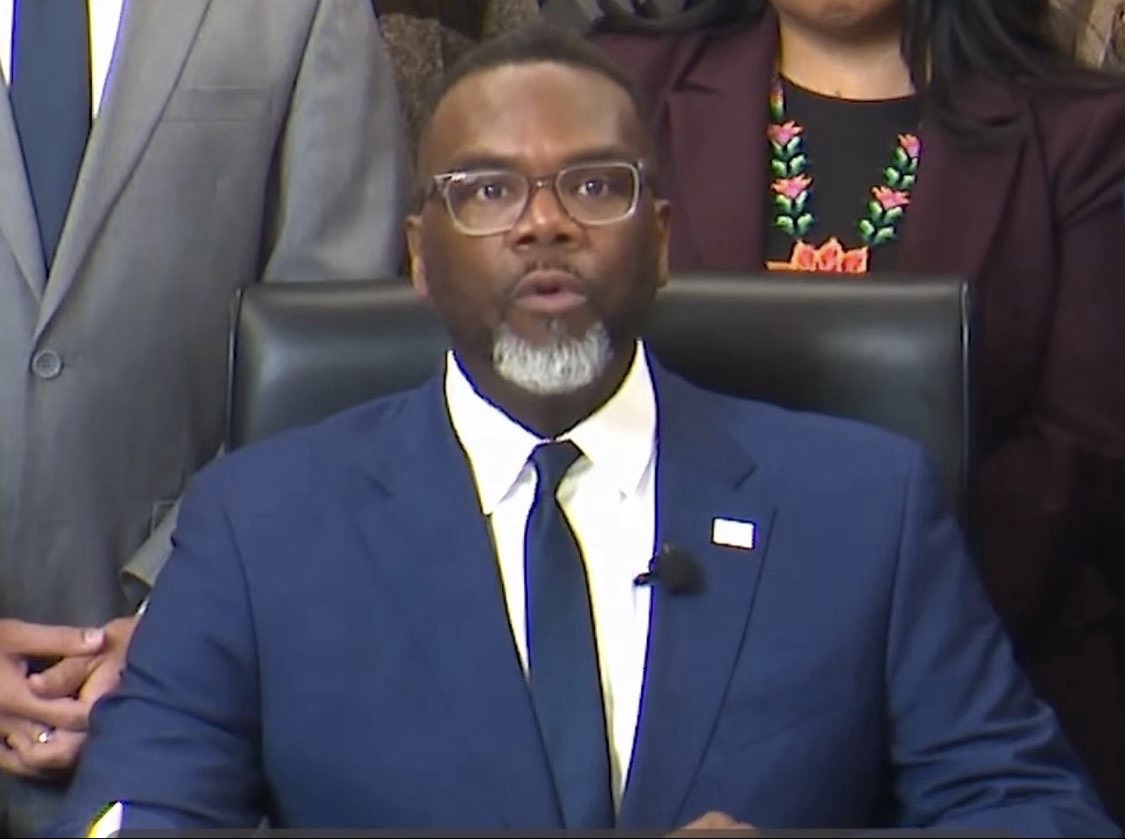

Mayor Brandon Johnson has signed a sweeping executive order directing the Chicago Police Department (CPD) to investigate alleged misconduct by federal immigration agents, a move city officials say positions Chicago as the first city in the nation to pursue local legal accountability for federal immigration enforcement actions.
The executive order, signed Saturday, instructs CPD to document and investigate the conduct of federal immigration agents — including Immigration and Customs Enforcement (ICE) — when their actions may cross into criminal behavior. The directive allows for potential felony referrals to the Cook County State’s Attorney’s Office.
Dubbed “ICE on Notice,” the order requires Chicago police officers to record federal immigration activity using body-worn cameras, document encounters in official reports, and identify federal supervisors present at enforcement scenes where alleged abuses may occur.
Under the new policy, CPD will be tasked with compiling reports on potential legal violations by federal agents and formally referring qualifying cases to prosecutors for review. The mayor’s office said the department will also publicly release aggregated data detailing documented violations tied to federal immigration enforcement.
City officials emphasized that the directive does not interfere with federal authority but instead reinforces local accountability when federal actions potentially violate state or local law.
“This makes Chicago the first city in the nation to leverage local authority to pursue legal accountability for misconduct by federal immigration agents,” Johnson’s office said in a statement.
Speaking at a City Hall news conference, Johnson framed the executive order as a public safety measure aimed at restoring trust between law enforcement and Chicago residents.
“These federal agents are undermining the trust in law enforcement that we have been working really hard to rebuild over the past three years,” Johnson said. “If the public does not trust law enforcement, everyone is less safe.”
The move comes amid heightened scrutiny of federal immigration activity in the Chicago area and growing tension between local officials and federal authorities over enforcement tactics. Supporters of the order say it provides a clear framework for transparency and accountability, while critics argue it could deepen conflicts between city and federal law enforcement agencies.
As CPD begins implementing the directive, all eyes will be on how aggressively potential cases are documented — and whether any prosecutions ultimately move forward.