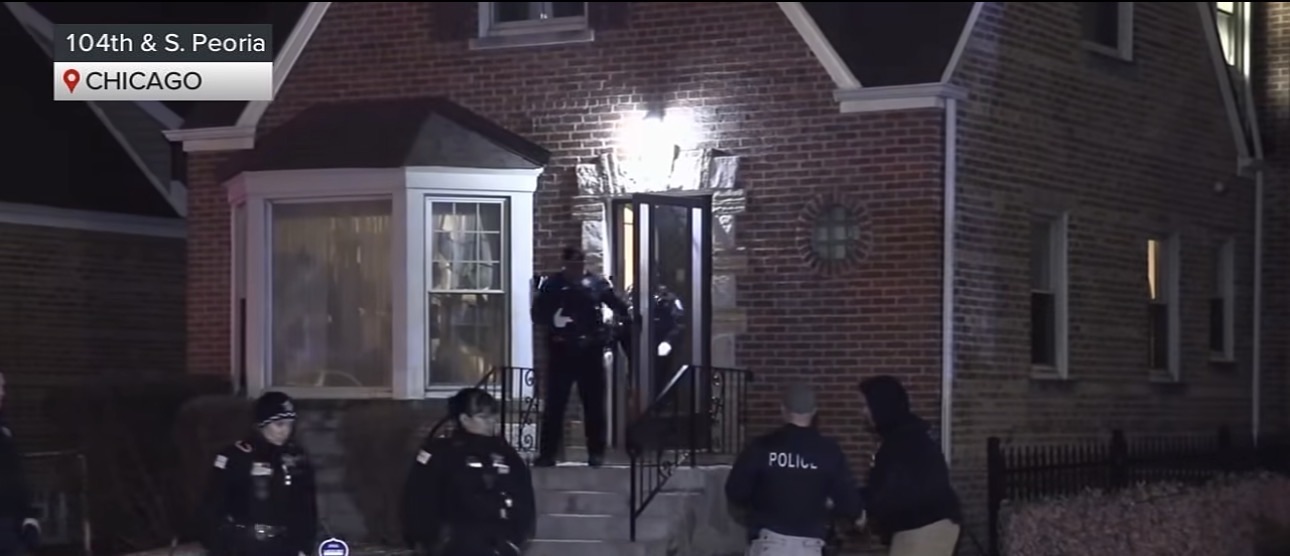
TWO ELDERLY WOMEN KILLED IN SOUTH SIDE HOME SHOOTING IN WASHINGTON HEIGHTS
A quiet night in Chicago’s Washington Heights neighborhood turned tragic after two elderly women were found shot inside a home on the South Side. With a 75-year-old man in custody and an investigation still unfolding, the incident has left the community searching for answers and reflecting on how violence can reach even the most unexpected places.
Another night in Chicago. Another story that feels heavier than the headline.
Advertisement
This time, it happened in Washington Heights, a quiet Far South Side neighborhood where people know their blocks, their neighbors, and the rhythm of everyday life.
But late Saturday night, that rhythm was shattered.
Around 10:50 p.m., police were called to the 10400 block of South Peoria Street after reports of a shooting inside a home.
When officers arrived, they found two women — ages 68 and 71 — suffering from gunshot wounds to the chest.
Advertisement
Both women were pronounced dead at the scene.
One of the victims was identified as Phyllis Goolsby, a 68-year-old resident of the home.
Police also detained a 75-year-old man at the scene and recovered a weapon. As of now, charges are still pending while investigators work to understand what led to the shooting.
A Different Kind of Chicago Story
When people outside the city talk about violence in Chicago, they often reduce it to statistics or stereotypes.
But stories like this complicate that narrative.
This wasn’t teenagers on a corner. It wasn’t a viral video from downtown.
This was inside a home. People in their late 60s and 70s. Lives that had already lived decades in this city.
And somehow, it still ended in tragedy.
Advertisement
The Part We Don’t Talk About Enough
Violence in Chicago isn’t always loud. Sometimes it’s quiet and personal.
Sometimes it happens in spaces that are supposed to be the safest place we have — our homes.
That’s what makes moments like this feel especially heavy for communities like Washington Heights. These are neighborhoods built on generations of families, church ties, block clubs, and front-porch conversations.
So when something like this happens, it doesn’t just affect one house.
Advertisement
It shakes the whole block.
Still Waiting for Answers
Investigators are still working to determine what happened and what led up to the shooting.
For now, the details remain limited.
What we do know is simple and painful: two women are gone, and a community is left trying to process another loss.
Advertisement
In Chicago, the headlines come fast. But the grief in neighborhoods like Washington Heights lingers long after the news cycle moves on.