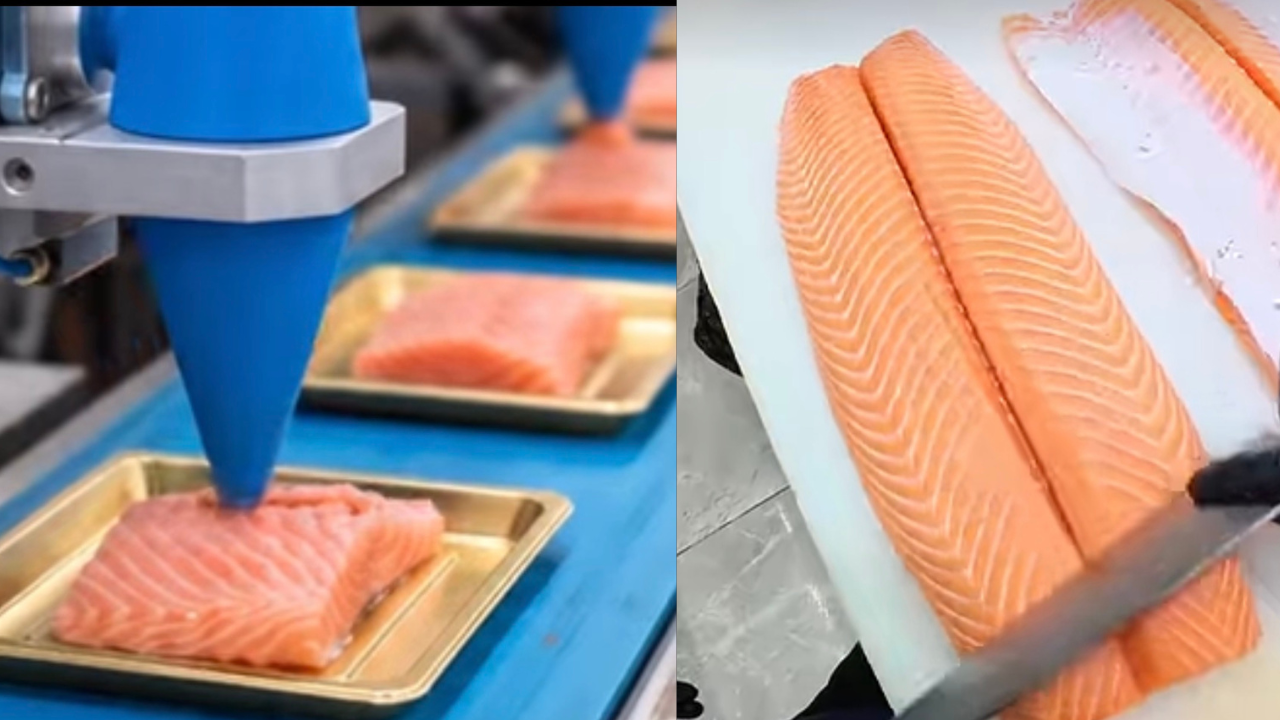
Plant-based steak, chicken and seafood are reaching grocery shelves, with food-printing technology part of the conversation. But before deciding whether the future belongs on your plate, it helps to separate how food is made from what it contains.
THE WORD
- Steakholder Foods announced Perfecta’s Northeastern U.S. retail launch September 3.
- The lineup includes plant-based steaks, chicken breast, salmon patties and white fish patties.
- These are plant-based alternatives, not conventional animal meat or fish.
Steakholder Foods says the rollout is supported by KeHE Distributors. Its announcement describes proprietary production technology designed to recreate textures and identifies both whole-cut products and traditional formats.
So what is 3D food printing? Equipment deposits edible ingredients in controlled layers to create a shape or texture. A 2023 scientific review describes applications ranging from chocolate and pasta to meat alternatives and meals designed for people with swallowing difficulties.
While the idea of digital food seems impossible, the ingredients and processing determine what ends up in the finished food. Steakholder’s published salmon-patty premix lists vitamin B12, iron and zinc alongside ingredients including soy protein, rice flour, vegetable oils and stabilizers.
Nonetheless, that formulation should not be assumed identical to every U.S. retail product. Likewise, a plant-based salmon name does not guarantee the same omega-3 profile as animal salmon. Shoppers should look for nutrient information instead of assuming nutritional equivalence from the product’s appearance.
However, the bigger issue is not the printer but rather the formulation. Products made with isolated proteins, flavorings and texture-building additives can fall into the ultra-processed category under the NOVA classification system. The 2023 review of 3D food printing identifies this as a concern, particularly if these foods become a substantial part of someone’s diet.
Printing technology does not automatically make a food healthier. Added vitamins and minerals do not settle the question. A product can contain B12, iron or protein and still be heavily processed.
To identify what you are buying, start with “plant-based” wording, the ingredient list, allergen disclosures and Nutrition Facts. Marketing phrases such as “structured” or “layer by layer crafted,” while less common also hint at 3D creations.
Innovation can offer choices. Clear labels and credible evidence helps shoppers decide which choices fit their needs.
Conversation question: Would you try technology-made meat alternatives?
Sources